






Oh, boy, this post took a while to show up, didn't it? I apologize, life got in the way :-) But finally, as promised , here are my two favorite tomato sauces: one is a popular vegetarian pasta sauce, the other a classic ragù – and true to Italian form, the latter is my mom's recipe.
Sugo all Puttanesca
(Harlot's Sauce)
Serves 4-6
Puttanesca is traditionally an uncooked tomato sauce, but that calls for fresh tomatoes. Because that is too much work for most, I modified the recipe slightly so it can be made with canned tomatoes and still be full of flavor.
Ingredients:
- 4 Tbsp extra-virgin olive oil
- 3-4 large cloves of garlic, chopped
- 8 large fresh basil leaves
- 1/2 cup black olives such as Gaeta, sliced
- 1 Tbsp capers, rinsed and drained
- salt and cayenne pepper flakes to taste
- 1 large (28 oz) can cubed plum tomatoes (I like Muir Glen)
Preparation:
1. In a sauce pan, warm the olive oil, then add the garlic and sauté briefly, just until golden. Add the cayenne flakes, stir, the immediately add the tomatoes. Lower the flame to the minimum, stir to combine, cover and let it cook for about 10 minutes. If you notice the sauce thickening too much, add a few tablespoons of water and lower the heat more.
2. Add the capers and black olives, cover again and let it cook for another 10 minutes.
3. Turn off the sauce and let it sit for about 15 minutes. Meanwhile, chop the basil leaves into thin strips. Then open the pot and add 1/4 teaspoon of salt and just a shake of cayenne pepper. Add the basil, stir, close the post and let it rest for another 5-10 minutes, to give the flavors the time to blend.
4. Open the pot, taste the sauce and add more salt or cayenne if you like. Keep in mind that when using cayenne flakes make the sauce develops and increases the longer the sauce is ready, so perhaps wait until it's time to serve it before you add more.
Notes:
- Don't chop the basil leaves too much in advance, because the oils that give flavor to the sauce will oxidize. When using fresh basil, it's important to chop/tear the leaves at the end of preparation, with the flame off, so the sauce absorb all the flavor of the delicious fresh basil :-)
- I know 1/4 of a teaspoon doesn't seem like a lot – however when using capers, the saltiness of a dish is a little unpredictable, even when they have been rinsed, so it's best to start with only a little salt and then take it from there.
Simple ragù
Serves 6
- 4 Tbsp extra-virgin olive oil
- 1/2 onion, minced
- 1 Tablespoon minced parsley
- 10-12 oz ground beef, preferable organic and/or grass-fed
- 1/4 cup red cooking wine (optional), I use an inexpensive Shiraz
- 2 MSG-free vegetable buillon (broth paste) cubes
- 1 large (28 oz) can cubed plum tomatoes, blended in a food processor
- 1 cup of water
- 2 bay leaves
- 1 medium carrot, peeled and cut in half
Preparation:
1. In a large saucepan, warm the olive oil and sauté the onion and parsley briefly.
2. Add the ground beef and sauté, stirring and breaking up chunks as needed, until very little pink remains.
3. If using wine, add it now to allow the meat to absorb the flavor. Lower the heat a little.
4. When the wine has almost been absorbed/evaporated, add the tomatoes and stir to combine. Add the water, bay leaves, buillon cubes and carrot, stir and lower the heat to medium.
5. When the sauce starts bubbling, lower the heat to keep it at a gentle simmer. Stir, partially cover with a lid and let it simmer for 20-25 minutes, stirring occasionally, until the sauce has thickened slightly and it's nice and fragrant.
6. Turn off the heat and let the sauce sit for 10 minutes, then taste and add a little salt if needed.
Note:
- I prefer to make my sauce a tad on the bland side, because I always serve pasta with grated Parmesan, which is quite salty. If you are avoiding dairy and plan on serving your pasta without cheese or replacing it with nutritional yeast, you can add a little salt to the sauce. But be careful not to make it too salty, for that cannot be corrected.
- I hate to get bossy but this has to be said: Please don't serve any Italian dishes, particularly pasta dishes, with the "Parmesan" product that comes in shakers/canisters, often found in US pizza parlors – it's truly an abomination and it will spoil the flavor of the delicious sauce you have just made. Purchase freshly grated Parmesan or a small chunk of it and grate it yourself over each plate: that is the flavor you are looking for when cooking Italian dishes. I'm not even sure you'll like the dried "Parmesan" flakes after tasting the real thing, anyway ;-)
Showing posts with label Italian. Show all posts
Showing posts with label Italian. Show all posts
Saturday, February 21, 2009


Wednesday, October 8, 2008
Kitchen Confidential: The secret to great sauce
It used to be such a pet peeve of mine, how Italian cooking is portrayed in the US. Or better, not how it's portrayed, more how it's executed. The pizza made here 95% of the time resembles nothing like the pizza in Italy, and please don't bring up that rumor that pizza was invented by Italo-Americans. (In actuality, pizza existed in Italy well before Italians even stepped on American soil.) It bugged me when I read recipes for lasagna that include cottage cheese. Because seriously, no one in Italy would ever dream of adding cottage cheese to lasagna. I think maybe I was offended by symbols of my culture being somewhat defaced.
But after living outside of Italy for 14 years, I realize that it's ok. Afterall, imitation is the sincerest form of flattery. And surely there can be several versions of one dish – afterall, I do enjoy fusion cooking.
I don't necessarily believe that everyone should know and love the same "classics", but I do think it's good to develop some classic dishes of your own. In Italy, several of those classic dishes include a good tomato sauce, including the two I mentioned above: pizza and lasagne. Because when a dish features a sauce, it's really only as good as the sauce itself. And since a good tomato sauce is a must to have in your repertoire - no matter how much or how little you cook – I thought I'd share a few secrets about the perfect tomato sauce.
1. Terminology: the sauce commonly referred to as "bolognaise", featuring ground meat, is actually called ragù. Bolognese is a special kind of ragù, which includes more ingredients and requires a much longer time to prepare.
2. Sweetness: in order to counter the acidity that tomatoes produce when cooked, many cooks mistakenly resort to adding sugar to the sauce. In truth, this only covers the acidity, it doesn't eliminate it – so the sauce will often show its acidity in other ways, i.e. causing heartburn. To avoid that, add a large peeled carrot or 1/2 an (unpeeled) apple to the sauce before you bring it to a boil or even a simmer. It will absorb the acidity, and it should be discarded afterwards.
3. Flavor:If you take one additional step before adding the ingredients to the pan, it will make your sauce much better: sauté fresh herbs in olive oil in the pan, before adding the tomato. For a simple ragù, 1/2 onion sauteed in a little olive oil will do.
Always, always use extra-virgin olive oil to prepare your pasta sauce: it makes such a difference in the outcome! And olive oil is so full of flavor that a little goes a long way: if you use olive oil to sauté, chances are you won't feel the need to add piles of Parmesan or more olive oil once the pasta is served, because the sauce will taste very rich.
If using fresh herbs in a recipe, always chop them and add them at the end - the oils lose potency when cooked. So for instance, if you are using fresh basil, don't chop it until the sauce is ready; at that point turn off the heat, chop the basil and add it to the pot, stir and let the flavors blend.
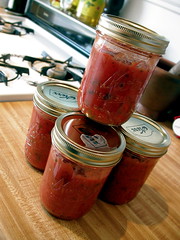
4. Storage: Don't ever store your leftover sauce in plastic containers: despite the carrot trick, tomatoes are still acidic in nature and that will cause molecules from the plastic container to leach into the sauce. Purchase glass jars or save and wash glass jars from jam, pickles, mustard or store-bought sauce to use for this specific purpose: storing your tomato sauce.
I hope you'll find these tips helpful!
Next week I'll share my favorite sauce recipes with you :-)
But after living outside of Italy for 14 years, I realize that it's ok. Afterall, imitation is the sincerest form of flattery. And surely there can be several versions of one dish – afterall, I do enjoy fusion cooking.
I don't necessarily believe that everyone should know and love the same "classics", but I do think it's good to develop some classic dishes of your own. In Italy, several of those classic dishes include a good tomato sauce, including the two I mentioned above: pizza and lasagne. Because when a dish features a sauce, it's really only as good as the sauce itself. And since a good tomato sauce is a must to have in your repertoire - no matter how much or how little you cook – I thought I'd share a few secrets about the perfect tomato sauce.
1. Terminology: the sauce commonly referred to as "bolognaise", featuring ground meat, is actually called ragù. Bolognese is a special kind of ragù, which includes more ingredients and requires a much longer time to prepare.
2. Sweetness: in order to counter the acidity that tomatoes produce when cooked, many cooks mistakenly resort to adding sugar to the sauce. In truth, this only covers the acidity, it doesn't eliminate it – so the sauce will often show its acidity in other ways, i.e. causing heartburn. To avoid that, add a large peeled carrot or 1/2 an (unpeeled) apple to the sauce before you bring it to a boil or even a simmer. It will absorb the acidity, and it should be discarded afterwards.
3. Flavor:If you take one additional step before adding the ingredients to the pan, it will make your sauce much better: sauté fresh herbs in olive oil in the pan, before adding the tomato. For a simple ragù, 1/2 onion sauteed in a little olive oil will do.
Always, always use extra-virgin olive oil to prepare your pasta sauce: it makes such a difference in the outcome! And olive oil is so full of flavor that a little goes a long way: if you use olive oil to sauté, chances are you won't feel the need to add piles of Parmesan or more olive oil once the pasta is served, because the sauce will taste very rich.
If using fresh herbs in a recipe, always chop them and add them at the end - the oils lose potency when cooked. So for instance, if you are using fresh basil, don't chop it until the sauce is ready; at that point turn off the heat, chop the basil and add it to the pot, stir and let the flavors blend.
4. Storage: Don't ever store your leftover sauce in plastic containers: despite the carrot trick, tomatoes are still acidic in nature and that will cause molecules from the plastic container to leach into the sauce. Purchase glass jars or save and wash glass jars from jam, pickles, mustard or store-bought sauce to use for this specific purpose: storing your tomato sauce.
I hope you'll find these tips helpful!
Next week I'll share my favorite sauce recipes with you :-)
Wednesday, September 10, 2008
Recipe: Risotto alla Milanese (a.k.a. Saffron Mushroom Risotto)
Risotto is one of the most popular dishes ordered at Italian restaurants - particularly outside of Italy. There are many different kinds, but Risotto alla Milanese is well known as a delicious traditional Italian dish.
Here is the recipe for Saffron Risotto using dried mushrooms, the most popular and well-known version. I am sure you will find it surprisingly simple to master - and then this dish won't have to be an occasional treat anymore!
Ingredients for 6 people:
- 4 Tbsp extra-virgin olive oil
- 1 medium onion, finely chopped
- 3 cups uncooked Arborio rice (Carnaroli will work as well)
- 6 oz dry white wine
- 2 1/2 pints meat broth or very good vegetable broth
- 1/2 cup dried Porcini mushrooms
- 2 sachet saffron powder (or 1/2 tsp saffron strands*)
- 1/2 cup or more of fresh Parmesan cheese
- freshly grated black pepper to taste
Preparation:
1. Warm up the broth in a pot, and leave nerby on very low heat, so that it stays warm but doesn't evaporate. Add the dried mushrooms to the pot.
2. In a wide pot or deep pan, warm up the oil and sauté the onion until golden. Lower the heat a little, add the rice, stirring often, and let it toast until it sounds kind of like sand.
3. Add the wine, stir and let the alcohol evaporate and the rice absorb the liquid.
4. Lower the heat to simmer and start adding the hot broth, one or maximum two ladles at a time, stirring after each addition, and letting the rice absorb the broth before adding more.
5. Continue for about 15 minutes. At this point, you shouldn't have a lot of broth left. Dissolve the saffron in a ladle of broth and add to the risotto, stirring occasionally.
6. Continue with the rest of the broth until the rice is tender but still slightly chewy (Arborio takes about 20 minutes, counting from when you started adding the broth). Remove it from the flame and let it rest for 2-3 minutes.
7. Add 1/2 cup of Parmesan and stir well. Serve the rice and grate black pepper on top of each portion. Serve with additional Parmesan at the table.
Buon appetito!
*Note: I prefer to use powder because it gives a brighter and more even color, however if you can only find strands, use 1/4 teaspoon of strands for every sachet of saffron recommended, and proceed as follows:
as you start cooking, remove 1 cup of hot broth from the pot and pour it into a coffee mug, add the strands and let them steep for 20 minutes or more, until the rice is almost cooked. Then add the saffron broth as you would in step 5 and continue with the recipe.
Thank you to Sharon, for asking about this!
Tips:
- if you prefer a milder mushroom flavor, soak the dried mushrooms in a bowl of warm water for 10 minutes (instead than in the broth), then drain them and discard the water (or you may save it and freeze it to use in another dish if you like). Alternatively, you can use dried chanterelle mushrooms instead; they have a milder flavor but still blend very nicely with the dish.
- if you can't have dairy, try adding nutritional yeast instead: it has a cheesy flavor and is rich in B vitamins. Start with a little though, because it has quite a strong flavor and not everyone likes it.
- if you prefer your risotto to have a very mild flavor you can reduce the wine to 4 oz, or decrease the saffron to 1 packet.

Here is the recipe for Saffron Risotto using dried mushrooms, the most popular and well-known version. I am sure you will find it surprisingly simple to master - and then this dish won't have to be an occasional treat anymore!
Ingredients for 6 people:
- 4 Tbsp extra-virgin olive oil
- 1 medium onion, finely chopped
- 3 cups uncooked Arborio rice (Carnaroli will work as well)
- 6 oz dry white wine
- 2 1/2 pints meat broth or very good vegetable broth
- 1/2 cup dried Porcini mushrooms
- 2 sachet saffron powder (or 1/2 tsp saffron strands*)
- 1/2 cup or more of fresh Parmesan cheese
- freshly grated black pepper to taste
Preparation:
1. Warm up the broth in a pot, and leave nerby on very low heat, so that it stays warm but doesn't evaporate. Add the dried mushrooms to the pot.
2. In a wide pot or deep pan, warm up the oil and sauté the onion until golden. Lower the heat a little, add the rice, stirring often, and let it toast until it sounds kind of like sand.
3. Add the wine, stir and let the alcohol evaporate and the rice absorb the liquid.
4. Lower the heat to simmer and start adding the hot broth, one or maximum two ladles at a time, stirring after each addition, and letting the rice absorb the broth before adding more.
5. Continue for about 15 minutes. At this point, you shouldn't have a lot of broth left. Dissolve the saffron in a ladle of broth and add to the risotto, stirring occasionally.
6. Continue with the rest of the broth until the rice is tender but still slightly chewy (Arborio takes about 20 minutes, counting from when you started adding the broth). Remove it from the flame and let it rest for 2-3 minutes.
7. Add 1/2 cup of Parmesan and stir well. Serve the rice and grate black pepper on top of each portion. Serve with additional Parmesan at the table.
Buon appetito!
*Note: I prefer to use powder because it gives a brighter and more even color, however if you can only find strands, use 1/4 teaspoon of strands for every sachet of saffron recommended, and proceed as follows:
as you start cooking, remove 1 cup of hot broth from the pot and pour it into a coffee mug, add the strands and let them steep for 20 minutes or more, until the rice is almost cooked. Then add the saffron broth as you would in step 5 and continue with the recipe.
Thank you to Sharon, for asking about this!
Tips:
- if you prefer a milder mushroom flavor, soak the dried mushrooms in a bowl of warm water for 10 minutes (instead than in the broth), then drain them and discard the water (or you may save it and freeze it to use in another dish if you like). Alternatively, you can use dried chanterelle mushrooms instead; they have a milder flavor but still blend very nicely with the dish.
- if you can't have dairy, try adding nutritional yeast instead: it has a cheesy flavor and is rich in B vitamins. Start with a little though, because it has quite a strong flavor and not everyone likes it.
- if you prefer your risotto to have a very mild flavor you can reduce the wine to 4 oz, or decrease the saffron to 1 packet.
Subscribe to:
Posts (Atom)