








It used to be such a pet peeve of mine, how Italian cooking is portrayed in the US. Or better, not how it's portrayed, more how it's executed. The pizza made here 95% of the time resembles nothing like the pizza in Italy, and please don't bring up that rumor that pizza was invented by Italo-Americans. (In actuality, pizza existed in Italy well before Italians even stepped on American soil.) It bugged me when I read recipes for lasagna that include cottage cheese. Because seriously, no one in Italy would ever dream of adding cottage cheese to lasagna. I think maybe I was offended by symbols of my culture being somewhat defaced.
But after living outside of Italy for 14 years, I realize that it's ok. Afterall, imitation is the sincerest form of flattery. And surely there can be several versions of one dish – afterall, I do enjoy fusion cooking.
I don't necessarily believe that everyone should know and love the same "classics", but I do think it's good to develop some classic dishes of your own. In Italy, several of those classic dishes include a good tomato sauce, including the two I mentioned above: pizza and lasagne. Because when a dish features a sauce, it's really only as good as the sauce itself. And since a good tomato sauce is a must to have in your repertoire - no matter how much or how little you cook – I thought I'd share a few secrets about the perfect tomato sauce.
1. Terminology: the sauce commonly referred to as "bolognaise", featuring ground meat, is actually called ragù. Bolognese is a special kind of ragù, which includes more ingredients and requires a much longer time to prepare.
2. Sweetness: in order to counter the acidity that tomatoes produce when cooked, many cooks mistakenly resort to adding sugar to the sauce. In truth, this only covers the acidity, it doesn't eliminate it – so the sauce will often show its acidity in other ways, i.e. causing heartburn. To avoid that, add a large peeled carrot or 1/2 an (unpeeled) apple to the sauce before you bring it to a boil or even a simmer. It will absorb the acidity, and it should be discarded afterwards.
3. Flavor:If you take one additional step before adding the ingredients to the pan, it will make your sauce much better: sauté fresh herbs in olive oil in the pan, before adding the tomato. For a simple ragù, 1/2 onion sauteed in a little olive oil will do.
Always, always use extra-virgin olive oil to prepare your pasta sauce: it makes such a difference in the outcome! And olive oil is so full of flavor that a little goes a long way: if you use olive oil to sauté, chances are you won't feel the need to add piles of Parmesan or more olive oil once the pasta is served, because the sauce will taste very rich.
If using fresh herbs in a recipe, always chop them and add them at the end - the oils lose potency when cooked. So for instance, if you are using fresh basil, don't chop it until the sauce is ready; at that point turn off the heat, chop the basil and add it to the pot, stir and let the flavors blend.
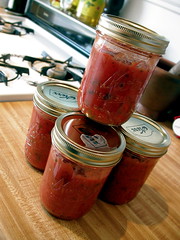
4. Storage: Don't ever store your leftover sauce in plastic containers: despite the carrot trick, tomatoes are still acidic in nature and that will cause molecules from the plastic container to leach into the sauce. Purchase glass jars or save and wash glass jars from jam, pickles, mustard or store-bought sauce to use for this specific purpose: storing your tomato sauce.
I hope you'll find these tips helpful!
Next week I'll share my favorite sauce recipes with you :-)


Subscribe to:
Post Comments (Atom)









6 comments:
Oh, I would love a recipe! And of course you are right about the pizza. I remember the pizza in Italy being so much better than here and full of such wonderful flavors. I also lived in London for awhile and found it funny when they called "american pizza" pizza with corn & broccoli on top, along with other things. When have I ever seen corn on pizza here?
I don't make pizza very often, but pasta sauce is one of my favorite things to cook. A huge pot of tomato sauce cooking all day makes the house smell so comforting!
Thanks for the very helpful tips. I hadn't thought of using a carrot, but I definitely will next time!
brilliant tips babes! especially glass jars! thank you. Mmm, my mouth is watering thinking about ragu! I miss Italy. I had the best 'Penne al Vodka' in Rome 2 and half years ago. You wouldn't happen to have a recipe for that would you? hugs, Kiki..
I just came visiting from Mom101. Can you share the difference in seasoning for pasta sauce and pizza sauce? My pizza sauce always tastes like it should be on pasta.
Hi Jill!
Well, for pizza it's best to use a very simple tomato sauce - in fact in Italy we don't make sauce to put on pizza, we put plain tomatoes, (raw or canned/plum) and then top it with origano (key ingredient) and whatever other toppings one wants on their pizza.
For pasta, on the other hand, one must avoid origano. Fresh basil is good, sauteed onion with a little parsley is ok, but no origano. I will post my two favorite pasta sauces ASAP!
Post a Comment